
Mego - Live, Create, Connect
Rayhan setyawanLifestyle
3.48.00 Reviews
- Version
- 1.2.1
- Installs
- 500.00K
- Age Rating
- Mature 17+
Screenshots


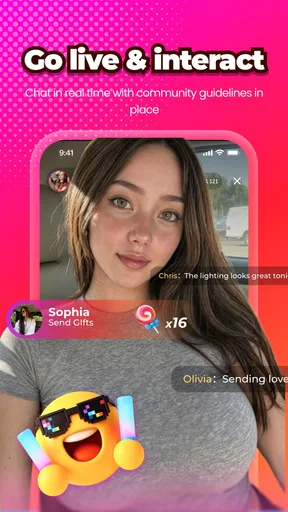
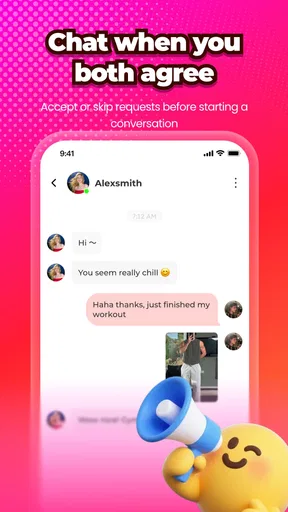
Our Review of Mego - Live, Create, Connect
 Analysis by Appyee
I approached Mego - Live, Create, Connect as a newcomer would: install it, look for the quickest useful interaction, and decide whether it deserves a regular place on my phone. It is a free lifestyle app built around a global live community and chat experience, developed by Rayhan setyawan. The basic idea is easy to understand, but the value depends heavily on how comfortable you are with meeting unfamiliar people online and managing conversations that can move quickly.
My first impression is that Mego is aimed at people who want social discovery rather than a quiet, private messaging tool. It gives you a place to browse community activity, enter conversations, and decide how much interaction feels right. That makes it more spontaneous than ordinary messaging apps, where you usually need an existing contact or a shared group before anything starts.
The app is free to download, although it includes optional purchases ranging from under a dollar to amounts reaching nearly one hundred dollars per item. I would keep that in mind before exploring every paid-looking option. The age classification is Mature 17+, so I would not treat it as a casual app for younger family members. It is better understood as an adult social environment where personal boundaries and sensible privacy habits matter.
Getting from installation to a useful first conversation
I would use the first session to learn the pace of Mego before deciding whether its live community suits me. A brief visit can tell you more than a polished profile: notice how easy it is to find a conversation, whether the replies feel reciprocal, and whether you can comfortably step away. That first impression also gives you a practical basis for choosing what to explore next.
What to expect when you open Mego
Mego is not the kind of app I would install expecting a structured course, a productivity system, or a carefully organized contact list. Its appeal comes from movement: discovering people, seeing what conversations are available, and choosing whether to participate. That open-ended design can feel refreshing if you are bored with the same familiar social circles, but it can also feel less predictable than a conventional chat app.
The store summary describes it as a global live community and chat app, while the short description simply says “Mego.” In practical terms, I would expect the first session to be about orientation. You need to learn where community activity appears, how conversations begin, and which controls let you leave or limit an interaction. I would not rush through those first screens just to start chatting.
The global angle is important. You may encounter people with different communication styles, time zones, and expectations. That can make a short exchange more interesting, especially if you enjoy meeting people outside your usual local circle. It also means that humor, slang, and directness may not always translate well. I found that a simple opening question is safer and more effective than assuming a stranger shares my context.
With an average rating of around three and a half stars from roughly five hundred ratings, Mego appears to offer a mixed experience rather than universal approval. I read that as a reason to approach it with realistic expectations. The concept may suit you very well if you like spontaneous social discovery, while the same openness may frustrate you if you want consistent moderation, predictable replies, or a tightly curated community.
First setup: take control before joining in
My advice for a first-time user is to spend a few minutes setting up a comfortable profile and checking the visible interaction controls before starting a conversation. You do not need to reveal your full identity to make a useful introduction. A simple display name and a short description of the kind of conversation you enjoy are enough to give others a starting point while keeping unnecessary personal details private.
I would avoid adding a workplace, exact neighborhood, daily routine, personal phone number, or other information that can identify you outside the app. This is especially important in a global chat environment, where a friendly conversation can become personal faster than expected. The Mature 17+ classification should reinforce that this is an adult setting, not a substitute for parental supervision or a private family messenger.
Before sending anything, I would also decide what I am actually looking for. There is a difference between wanting a quick conversation, finding people who share an interest, and building an ongoing connection. If you know your goal, you can leave unproductive chats sooner instead of trying to rescue every interaction. That small decision makes the app feel less random.
One useful habit is to prepare two or three neutral opening questions. I would use prompts such as “What brought you here today?” or “What kind of conversations do you enjoy?” They are broad enough for someone from another country to answer and do not demand private information. This is more reliable than opening with a joke or a local reference that may be misunderstood.
Since the app runs on Android versions beginning with 7.0, it is accessible to people using older supported devices as well as newer phones. The current version is 1.2.1, so I would make sure the installed version is current before judging the experience. On an older phone, I would also close unnecessary background apps if live community screens feel sluggish, though I would not assume that every performance issue comes from Mego itself.
Your first successful action should be small
The first meaningful success I would aim for is not collecting contacts or spending money. It is completing one comfortable exchange with a person who responds clearly. Start by browsing the available community activity, choose an interaction that seems relevant to your mood, and send a short message that invites an easy answer. The goal is to learn the rhythm of the app without putting pressure on the conversation.
Once someone replies, ask one follow-up question and share one small detail about yourself. That balance prevents the chat from feeling like an interview and avoids oversharing. For example, if someone mentions a hobby, I might say that I am exploring the app after work and ask how they got interested in it. It creates a natural next step without turning the first exchange into a personal biography.
I would consider the session successful even if it lasts only a few minutes. Mego works best when you treat early use as sampling rather than a commitment. You are learning which conversations feel welcoming, which topics travel well across cultures, and how quickly you can recognize an interaction that is not worth your time.
A practical workflow is to set a short first-session limit, try one or two conversations, and then pause to decide how you felt. Did you enjoy the discovery, or did you spend most of the time dismissing unwanted interactions? Did the live format help you meet someone interesting, or would a slower community forum suit you better? Those answers are more useful than judging the app after a single awkward message.
Where first-time users can become confused
The biggest possible confusion is assuming that “global community” automatically means every interaction will be meaningful. A large social space can offer variety, but variety also brings uneven conversation quality. Some people may be enthusiastic and respectful, while others may be brief, repetitive, or too personal. I would not interpret a poor first chat as proof that the entire app is ineffective, but I also would not feel obliged to keep trying with someone who makes me uncomfortable.
Another point to understand is the difference between being visible and being available. If the app presents active community areas, that does not mean you must answer every approach or remain online continuously. Use the app on your own terms. A short visit during a break can be enough; there is no benefit in turning casual social discovery into an obligation.
Paid elements may create another moment of hesitation. Mego is free, but optional in-app purchases can cost from less than a dollar to nearly one hundred dollars for an individual item. I would not buy anything during the first session. First learn what the free experience offers, then identify exactly what a paid item changes before confirming a purchase. If the benefit is unclear, close the screen and continue using the basic experience.
This is also where Mego differs from familiar alternatives. A standard messenger is usually better for dependable communication with people you already know. A social network may offer broader profiles, feeds, and established communities. A forum can be better when you want thoughtful answers that do not depend on someone being online at the same moment. Mego’s advantage is immediacy and discovery, not depth, certainty, or long-term organization.
I would also avoid treating a chat as proof of someone’s identity. Friendly conversation can build trust, but it does not verify who is behind a profile. Do not send money, account credentials, intimate material, or copies of identity documents. If an exchange becomes manipulative, sexual in a way you did not invite, threatening, or persistently intrusive, end it and use the app’s available safety controls rather than arguing.
A realistic everyday scenario
Imagine that I have twenty minutes after dinner and want conversation without calling a friend who may be busy. I open Mego, check the community activity, and look for an exchange that matches my interest rather than messaging the first person I see. I introduce myself with a simple question, respond to one answer, and notice whether the other person also shows curiosity.
If the conversation develops naturally, I can continue for a while. If it becomes repetitive or uncomfortable, I leave without feeling that I have failed. That is the right mindset for this app: a short, pleasant encounter is a valid result. The app does not need to produce a permanent friendship every time I open it.
For someone new to online communities, this scenario is reassuring because it keeps the first step manageable. You do not need a polished profile, an elaborate introduction, or a large social goal. You need a clear boundary, a simple question, and permission to stop when the interaction no longer feels useful.
Who will enjoy it, and who should choose something else
I think Mego is a good fit for adults who enjoy meeting unfamiliar people, are comfortable with live chat, and can handle conversations that vary in quality. It may also suit someone who has recently moved, works unusual hours, or wants occasional contact beyond an existing friend group. The global setting can make a short break feel more social than scrolling through a passive feed.
I would be more cautious recommending it to anyone who wants a tightly moderated, professional, or highly private communication space. It is also not my first choice for someone who dislikes spontaneous messages or prefers to think carefully before replying. In those cases, a familiar messenger, a topic-based forum, or a smaller private group will probably feel calmer and more dependable.
People who are sensitive to social pressure should establish their rules before using it. Decide what subjects are off limits, how long you want to chat, and what behavior makes you leave. That preparation is not excessive; it is what allows the app’s open format to remain enjoyable instead of draining.
How to make the next session better
After the first successful conversation, I would refine rather than expand too quickly. Notice which openings receive thoughtful replies and which lead nowhere. Keep the questions that encourage shared interests, and avoid sending the same generic greeting to everyone. A little specificity helps you find better matches without revealing private information.
I would also separate discovery from trust. It is fine to enjoy a conversation while still keeping personal details limited. If someone quickly asks to move elsewhere, requests money, or pressures you to prove your interest, I would treat that as a warning rather than a sign of closeness. The strongest connection is the one that develops without pressure.
Use the free experience long enough to understand your own pattern of use. If you return for short conversations and consistently find the format worthwhile, you can decide whether any optional purchase is genuinely useful. If you keep opening the app and leaving because the interactions feel random, paying more is unlikely to solve the underlying mismatch.
The developer, Rayhan setyawan, presents Mego as a lifestyle app rather than a tool for a single narrow task. That broad positioning makes the app flexible, but it also means your satisfaction depends on the community experience you encounter and the boundaries you bring. The install base has passed half a million, which suggests the concept has reached a substantial audience, but popularity alone does not guarantee that every session will suit your preferences.
For me, the strongest way to use Mego is as a lightweight doorway into new conversations, not as a replacement for trusted relationships. It can add a little variety to an ordinary day, especially when I approach it with a specific intention and a short time limit. Its weaker side appears when I expect every interaction to be relevant, deep, or consistently comfortable.
My recommendation is therefore measured: try it if you are an adult who genuinely wants global live chat and can manage an open social environment. Begin with a modest profile, aim for one respectful exchange, delay purchases until you understand the free experience, and leave conversations that cross your boundaries. Mego is most rewarding when curiosity is paired with caution. If you want dependable private messaging or carefully organized discussion, another category of app will serve you better; if you want spontaneous human contact, this free option is worth exploring with realistic expectations.
Verdict
Strengths of Mego - Live, Create, Connect
- Live video chats make meeting new people feel immediate and engaging.
- Creative tools help users share entertaining content with their audience.
- Interactive features encourage conversations instead of passive scrolling.
- The app offers opportunities to build a personal following over time.
- Available social features make it easy to discover active creators.
Limitations of Mego - Live, Create, Connect
- Live content quality can vary widely between creators and broadcasts.
- Frequent notifications may become distracting without careful settings.
- Public interactions may expose users to unwanted messages or attention.
- Some features may require in-app purchases or virtual currency.
- A stable internet connection is essential for smooth live streaming.
Similar Picks in This Category
View All
SmartThings
Samsung Electronics Co., Ltd.4.6

Google Home
Google LLC4.0

Pinterest4.2

Astrotalk - Talk to Astrologer
Astrology & Horoscope4.7

My Verizon
Verizon Consumer Group4.5

Samsung Wallet (Samsung Pay)
Samsung Electronics Co., Ltd.4.1
Frequently Asked Questions
What is Mego - Live, Create, Connect, and what can I do with it?
Mego - Live, Create, Connect is a social entertainment app focused on live interaction, content creation, and meeting other users online. After signing up, you can explore live broadcasts, participate in conversations, share your own content, and connect with people who have similar interests. The exact features available may depend on your region, account status, and the latest version of the app.
Is Mego - Live, Create, Connect free to download and use?
The app can generally be downloaded at no cost, allowing users to create an account and access its main social features. However, some services may include optional in-app purchases, virtual items, subscriptions, or paid interactions. Before confirming a transaction, carefully review the displayed price and payment details. Parents should also check device restrictions if younger users may access the app.
Do I need to create an account to use Mego?
An account is normally required for the full Mego experience, especially if you want to interact with creators, join live conversations, publish content, or build a personal profile. Registration may involve basic information and could offer different sign-in methods depending on your device. Use accurate details where necessary, choose a strong password, and review the app’s privacy options before becoming active.
Is Mego - Live, Create, Connect safe for everyone?
Because Mego is built around live social interaction and user-generated content, the experience can vary considerably from one broadcast or conversation to another. Users should avoid sharing private information, financial details, passwords, or their exact location with strangers. Use blocking and reporting tools when available, and remember that live content may not always be suitable for children. Check the platform’s age rating and community guidelines before downloading.
What should I know about privacy, permissions, and mobile data usage?
A live-content app may request access to features such as the camera, microphone, notifications, photos, or internet connection, depending on how you use it. Grant only the permissions you are comfortable with and review them in your phone’s settings. Streaming and watching live video can consume significant mobile data and battery, so Wi-Fi is recommended for longer sessions. Also review Mego’s privacy policy to understand how account and content information is handled.
